

Buy 3 (12 Packs) 4th (12 Pack) Free
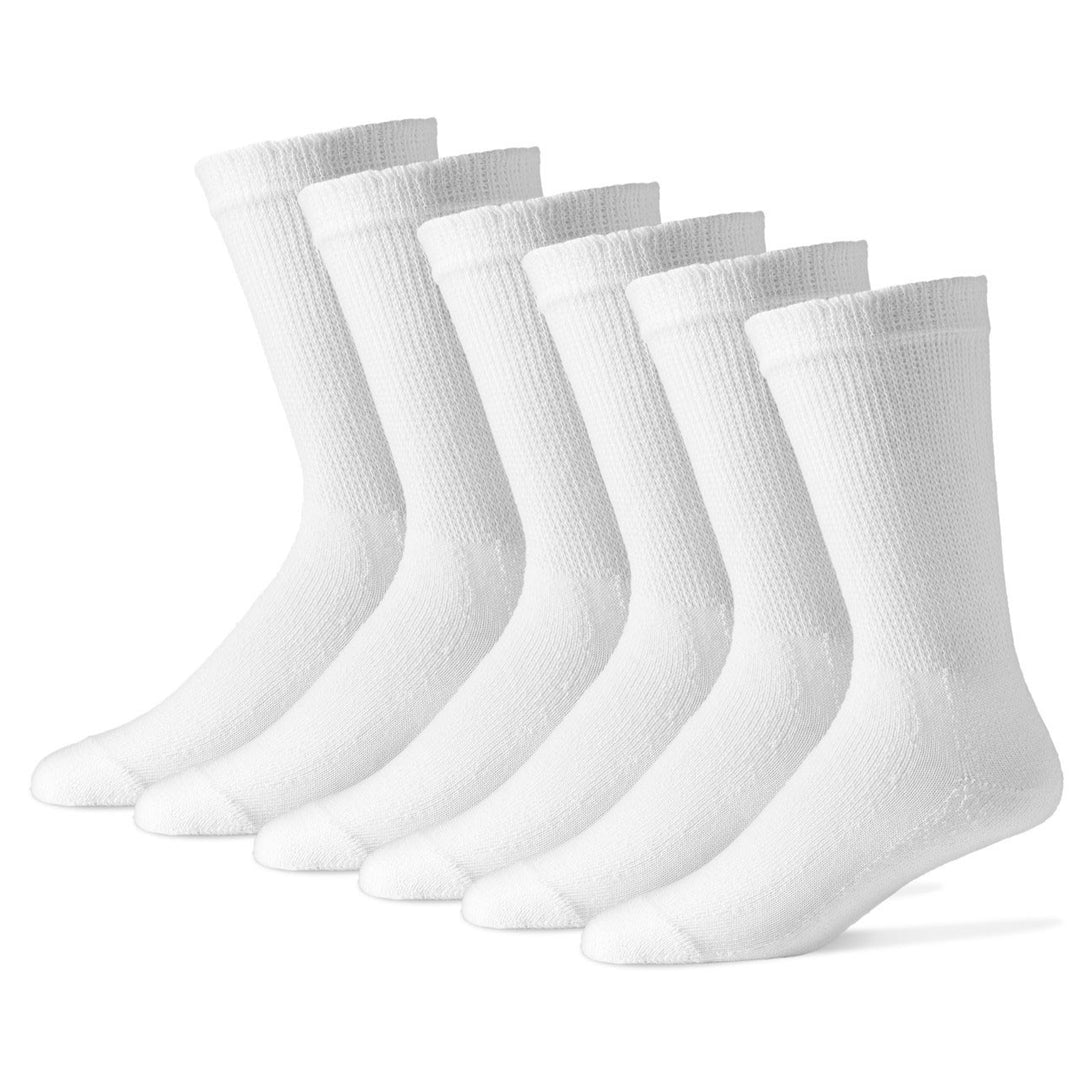
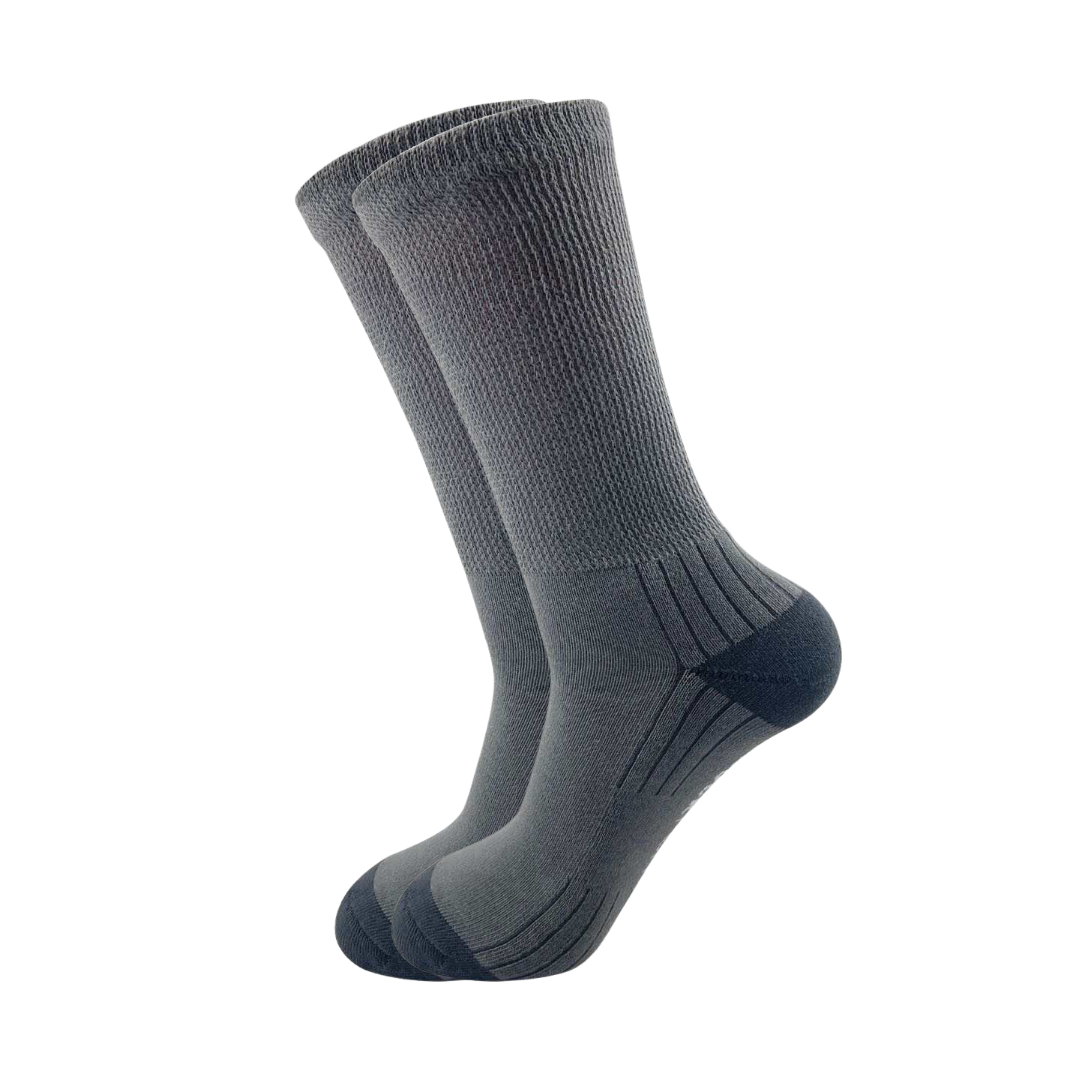
Putting on socks shouldn't be a struggle. Every pair in this collection was chosen because it goes on easily — wide opening, super-stretch knit, non-rolling cuff — requiring minimal hand grip and no precise positioning. For elderly patients with arthritis, reduced flexibility, or balance concerns, and for the caregivers who help them, these are the socks that actually get worn every day. Non-binding, cushioned, and moisture-wicking throughout.

The Unique Sock Needs of Older Adults with Diabetes
Diabetes management in older adults involves a specific set of foot care challenges that go beyond what younger patients face. Aging skin becomes thinner, more fragile, and slower to heal. Circulation tends to be more compromised. Arthritis makes daily tasks like putting on socks genuinely difficult. And many elderly diabetics depend on a caregiver for dressing assistance, which adds another layer of consideration.
The socks in this collection are chosen because they are easy to put on, gentle on delicate aging skin, and provide the non-binding diabetic protection that older adults with diabetes need most.
What Easy On Means in a Diabetic Sock
When we describe a sock as easy on, we mean three specific things: the opening at the top of the sock is wide so you do not need to stretch it aggressively to get it over the foot, the knit is super-stretch so the sock slides over the heel and up the leg without requiring significant grip strength, and the cuff does not roll or fold as it goes on, reducing the need for precise repositioning.
For a caregiver helping an elderly parent or spouse, these features dramatically reduce the physical effort and hand strain involved in the morning routine. Multiple customers have told us these are the first socks they have found that their loved one actually wears consistently — because the independence of getting them on without help has returned.
Frequently Asked Questions
What diabetic socks are easiest to put on for elderly people?
The easiest diabetic socks for elderly people share three characteristics: a wide-mouth opening, a super-stretch knit that slides over the heel with minimal force, and a non-rolling cuff that stays in position as it goes on. Crew length is generally easier to apply than over-the-calf because there is less sock to guide up the leg. Avoid socks with very firm elastic at the top — they require strong hand grip to stretch over the foot. The socks in this collection are specifically selected because customers and caregivers consistently describe them as exceptionally easy to put on.
Are there diabetic socks that do not leave marks on elderly legs?
Yes — and eliminating sock marks is one of the primary reasons elderly diabetic patients seek out specialty socks. Standard sock elastic digs into the lower leg and leaves indentation marks that can take hours to fade. On aging skin, these marks can actually break the surface if the elastic is tight enough and the skin is thin enough. Non-binding diabetic socks have tops specifically engineered to provide zero constriction — they stay up without gripping, so the marks never form. Every sock in this collection is non-binding.
How do I help an elderly parent put on diabetic socks?
Start with the sock fully rolled down to the toe. Guide the toe of the sock onto the foot first, then gently roll the cuff up the leg — rather than trying to stretch the sock over the entire foot at once. This is easier on your wrists and requires less force. With a good non-binding diabetic sock, the cuff unrolls smoothly without resistance. If balance is a concern, have your parent sit in a stable chair with their foot resting on a footstool at a comfortable height.
Should elderly diabetics wear socks to bed?
This depends on the individual. Some elderly diabetics wear loose diabetic socks at night to keep feet warm — cold feet can further compromise circulation. However, wearing a sock to bed that is at all tight can restrict circulation during the hours when you are not moving to counteract it. If sleeping with socks, choose the loosest, most non-binding option available and ensure the toe area is not constricting. Talk to your doctor or podiatrist for specific guidance based on your circulation status.
What is the best diabetic sock for a person with dementia who removes their socks?
For patients who pull at or remove their socks, a few features help: socks that feel comfortable enough that removing them is not an impulse, crew length rather than over-the-calf so there is less material to tug at, and slightly more structured cuffs that stay in place without being tight. Some caregivers also find that socks in a color the patient finds attractive — rather than plain white — are left on more consistently.