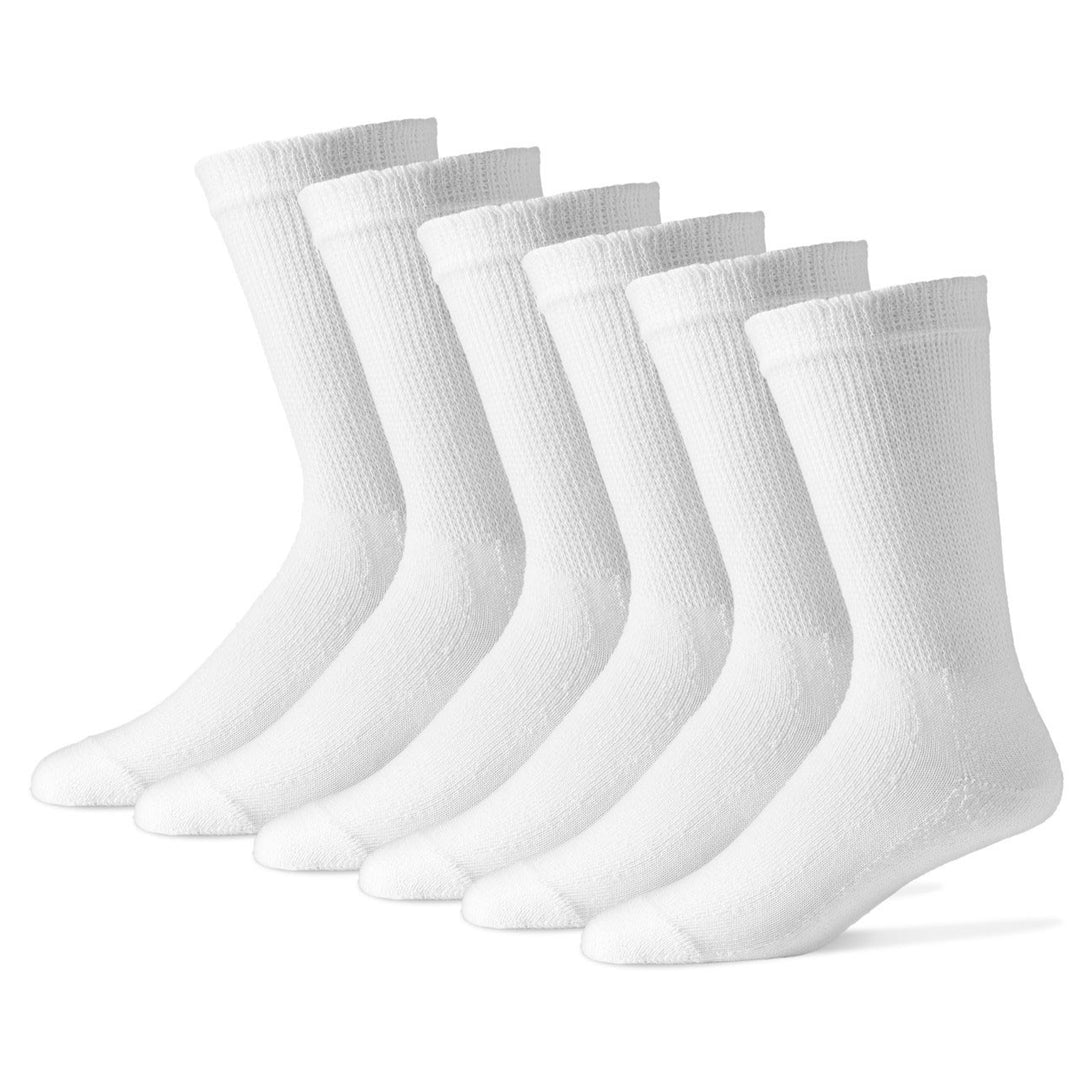
12 Pack Sale

Buy 3 (12 Packs) 4th (12 Pack) Free

Just add 4 (12 Packs) to your cart of any style (mix and match) and promo is automatically applied at checkout.
SHOP 12 PACKS

When your feet and ankles swell, regular socks make everything worse — the elastic band digs in exactly where fluid is pooling and restricts the drainage that would help reduce it. Every sock in this collection features an ultra-stretch non-binding top engineered to accommodate significant swelling without creating any constriction. Whether your edema is mild or severe, these socks flex with your feet rather than fighting against them.

    Filter

      Why Standard Socks Make Diabetic Swelling Worse

      When your feet and ankles swell — a condition called edema — the elastic band on a regular sock becomes a tourniquet. It digs into the leg at the exact point where fluid is pooling, restricting the lymphatic drainage that would otherwise help reduce that swelling. You end up with a visible ring on your leg and swelling that is worse below the sock line than above it.

      Diabetic socks designed for edema work completely differently. Their non-binding tops are knitted with a wide, ultra-stretchy cross-weave that accommodates significant leg circumference changes without creating any constriction. Many of the socks in this collection feature tops that stretch to over 11 inches in diameter — wide enough even for significantly swollen calves.

      What to Look for When Swelling Is Your Primary Concern

      Extra-wide non-binding cuffs are the single most important feature for edema. Also look for over-the-calf length for full lower leg coverage and gentle ankle support, breathable fabric that prevents heat buildup which worsens swelling, moisture-wicking construction to keep skin dry and reduce infection risk, and soft toe seam or seamless construction to prevent blistering on skin stretched by swelling.

      If your swelling is significant or changes dramatically throughout the day, consider keeping two size options available — a looser pair for your worst days, and your standard size for moderate swelling.

      Frequently Asked Questions

      What kind of socks help with diabetic foot swelling?

      Non-binding diabetic socks with an extra-stretch or loose-knit cuff are the best option for swollen feet. Unlike compression socks — which require a prescription level of tightness and are designed to push fluid upward — non-binding diabetic socks simply remove the restriction that makes swelling worse. They allow the foot and ankle to sit at their natural size without any external pressure. For people with moderate to severe edema, over-the-calf length provides more comprehensive coverage and a slight stabilizing effect on the ankle.

      Should diabetic patients with swollen feet wear compression socks or regular diabetic socks?

      This depends on the cause and severity of the swelling and should be confirmed with your doctor. Compression socks — which apply graduated pressure — can help when swelling is caused by venous insufficiency or poor lymphatic return. However, for many diabetics, especially those with peripheral arterial disease or severe neuropathy, compression can reduce already-compromised blood flow and cause harm. Non-binding diabetic socks are a safe default that helps swelling without any compression risk.

      Why do my ankles swell more in the evening?

      Ankle and foot swelling typically builds throughout the day due to the effects of gravity — fluid that is not efficiently circulated back up the leg by your venous system pools in the lowest points of your body. People with diabetes often have compromised circulation that makes this pooling more pronounced. This is why selecting diabetic sock size based on your end-of-day foot size is recommended — the sock needs to accommodate your worst-case swelling, not your morning measurement.

      Can socks cause swelling to get worse?

      Yes. Any sock with a tight elastic band at the top effectively creates a tourniquet just below the knee. This restricts the return of blood and lymphatic fluid from the leg, trapping fluid below the band. The result is pronounced edema below the sock line and visible indentation marks that can take hours to fade. Switching to non-binding diabetic socks eliminates this effect entirely.

      Are over-the-calf diabetic socks better for swelling than crew socks?

      For many people with diabetic foot swelling, yes. Over-the-calf length covers the entire ankle and calf — the area where edema most commonly develops — with the non-binding fabric. A crew sock that stops at mid-calf still leaves the ankle unsupported and can create a mild binding effect at its top edge if swelling extends that high. Over-the-calf socks with a super-stretch cuff provide maximum coverage without any binding.